Table Of Content
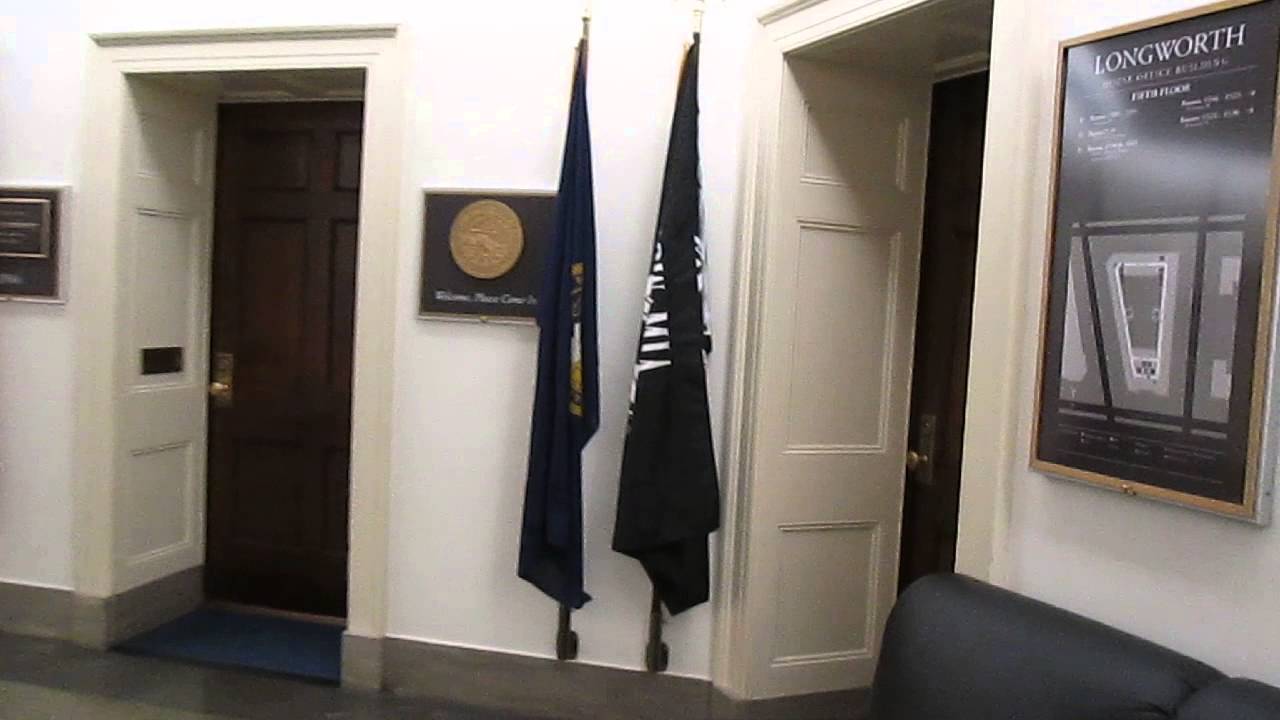
Congress authorized funds for acquiring and clearing the site and for constructing the new building. The foundations were completed in December 1930, and the building was accepted for occupancy on April 20, 1933. In an 8-month period, The Allied Architects produced two schemes for "a simple, dignified building not out of harmony with its surroundings."2 These two designs, as well as the Carrère and Hastings proposal, were published as House Document 122, 69th Congress, 1st Session.
Committee Information
While considerably different from the final design, these preliminary sketches by The Allied Architects foretold much of the architectural character of the future Longworth Building—serviceable and economical rather than monumental, which reflected some Members' concerns about the Cannon Building's ornate qualities. More than 50 years later, the congressman from Portland is preparing to retire after nearly three decades on Capitol Hill, and mounting a lonely campaign to persuade his fellow Democrats, including President Biden, to press for legalization of marijuana at the federal level as a central plank of their political platforms. Completed in 1908, the Cannon House Office Building is the oldest House office building. For an addition to the existing House Office Building, Lynn turned to its original architects, the well-known firm of Carrère and Hastings. They recommended that a 375-room addition be constructed within the existing courtyard, thereby leaving the external appearance of their original design unchanged.
Resources for National History Day
Inside the main entrance is a lobby with limestone walls, a marble floor, and an ornamental plaster ceiling. Elsewhere, important rooms and lobbies are also treated with decorative plaster ceilings and cornices designed with classical moldings and national symbols. The quality of the decorative plaster work is one of the principal beauties of the Longworth Building's interiors.

U.S. Capitol
The long-serving congressman from Portland, who has become the top marijuana advocate on Capitol Hill, believes the issue could boost President Biden’s support with young voters.
House panel details the ethics rules of a shutdown - Roll Call
House panel details the ethics rules of a shutdown.
Posted: Thu, 28 Sep 2023 07:00:00 GMT [source]
For Additional Information
The Longworth Building occupies an irregularly shaped site opposite the Capitol on the south side of Independence Avenue. It is flanked to the east by the older Cannon House Office Building (1908) and to the west by the newer Rayburn House Office Building (1965). Of the three House office buildings, the Longworth Building is the smallest at 702,608 square feet.
Longworth House Office Building
The Longworth House Office Building (LHOB) is one of five office buildings used by the United States House of Representatives. The building is located south of the Capitol, bounded by Independence Avenue, New Jersey Avenue, C Street S.E., and South Capitol Street, in southeast Washington. It has a floor area of 599,675 square feet (55,711.6 m2) and has a total of 251 congressional offices and suites, five large committee rooms, seven small committee rooms, and a large assembly room now used by the Ways and Means Committee. Other parts of the building were occupied by necessary support facilities, such as document storage, a post office, a credit union and a telephone exchange. In 1959, the lower part of the interior courtyard was enclosed to provide a much-needed cafeteria for Members, staff, and visitors.
House Is In Session
Because of its limited scope, however, this scheme was never given serious consideration. Mr. Blumenauer has urged officials close to Mr. Biden to make the issue a more prominent part of the president’s re-election message. He argues that legalization is not only good policy, but a potentially “electric” political issue that could help the 81-year-old Mr. Biden appeal to young people who polls show have drifted away from him, and whose backing could be vital to his chances of winning a second term.
Committees
Above this granite and marble base stand the three principal floors, which are faced with white marble. Ionic columns supporting a well-proportioned entablature are used for the building's five porticoes, the principal one of which is topped by a pediment. The Longworth Building takes its place along with the National Gallery of Art (1941) and the Jefferson Memorial (1943) as one of Washington's best examples of the neoclassical revival style popular in the second quarter of the twentieth century. It presents a somewhat more restrained appearance than the neighboring Cannon Building, which was designed in the more theatrical Beaux Arts style. Construction work, taking place mostly during the Great Depression, relied heavily on domestic materials and provided hundreds of jobs.
Congressional Office Buildings
In 1966, after the completion of the Rayburn House Office Building, congressional offices in the Longworth and Cannon Buildings were recon-figured to bring the total number of rooms in each suite to three. Between 1986 and 1994, improvements were made to the building's electrical and fire-protection/life-safety systems. Work included the lowering of hallway ceilings to accommodate the upgraded wiring and sprinkler equipment.
A walnut rostrum with decorative carvings of wreaths and stars serves as the focal point of the room. The Longworth Building is positioned on Square 689, bounded by Independence Avenue, New Jersey Avenue, South Capitol Street and C Street SE. Because of the slope at the site, the rusticated base of the building varies in height from two to four stories.
The pedimented Ionic portico of the main facade is reminiscent of the early nineteenth-century architectural work of Robert Mills, whose position as one of the first of the government's architects was rediscovered during this period. The Allied Architects, whose principals were Frank Upman, Gilbert LaCoste Rodier, Nathan C. Wyeth, and Louis Justement, prepared two designs during 1925 and were retained as consultants to the architect of the Capitol when one was selected in 1929 for the Longworth Building. The building also housed five large committee rooms, seven small committee rooms, and a large assembly room, all with marble baseboards, ornamental crown molding and lighting fixtures, and bronze clocks. The assembly room, now used by the Ways and Means Committee, seats 450 persons; the House of Representatives met here in 1949 and 1950 while its chamber in the Capitol was being remodeled. The niche in each corner is topped with plaster swags and a sculptural eagle.


No comments:
Post a Comment